Introduction: More Traffic ≠ More Growth
In today’s digital world, it’s easy to get caught up in vanity metrics like clicks, impressions, or pageviews. Many businesses assume that if they can just bring more people to their website, growth will naturally follow. But here’s the truth: not all traffic is created equal.
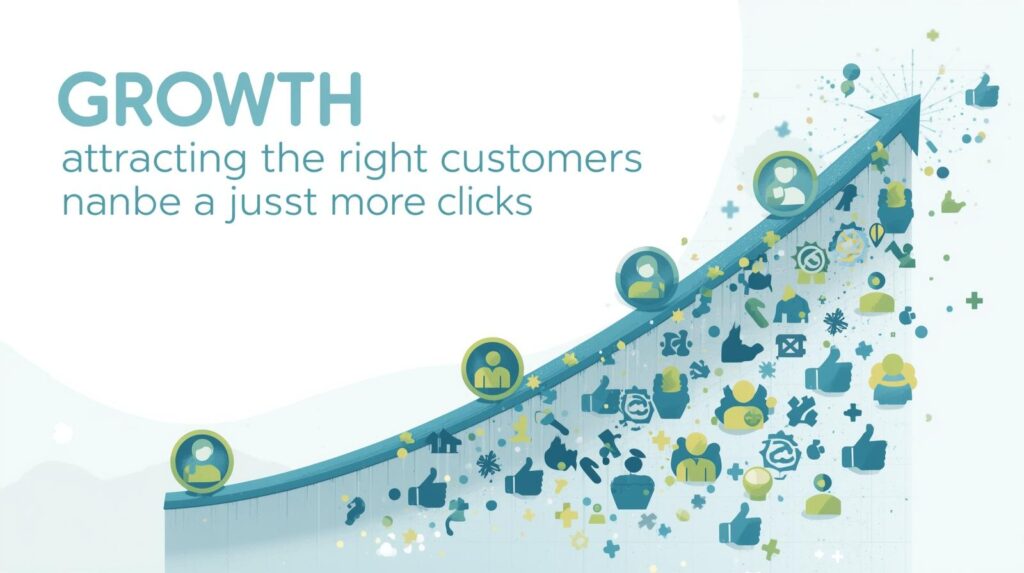
A thousand random clicks from people who don’t need your product will do far less for your revenue than 100 visits from highly interested, qualified prospects. That’s why sustainable business growth isn’t about chasing more clicks — it’s about attracting the right customers.
In this blog, we’ll explore why quality matters more than quantity, how to identify your ideal customers, and proven strategies to attract them.
The Problem with Chasing Clicks Alone
Many businesses invest heavily in ads, SEO, or social media campaigns designed to drive as much traffic as possible. While that sounds logical, there are major downsides:
- High bounce rates: If visitors don’t find what they’re looking for, they leave quickly.
- Low conversion rates: Random clicks rarely translate into sales or sign-ups.
- Wasted ad spend: Paying for irrelevant clicks eats into your marketing budget.
- Misleading data: Large traffic numbers can give the illusion of success while revenue remains stagnant.
Essentially, if you’re not targeting the right audience, you’re filling a leaky bucket — lots of water in, but most of it drains out.

Why the Right Customers Matter for Growth
Attracting the right customers isn’t just a marketing tactic — it’s the foundation of long-term business success. Here’s why:
1. Higher Conversion Rates
When your marketing speaks directly to the people who actually need your product or service, they’re more likely to take action — whether that’s making a purchase, booking a call, or subscribing.
2. Increased Customer Lifetime Value (CLV)
The right customers don’t just buy once. They stick around, buy again, and often spend more over time. That creates predictable, recurring revenue.
3. Better Word-of-Mouth & Referrals
Happy, satisfied customers naturally recommend your business to others. These referrals are often pre-qualified leads, which makes them even more valuable.
4. Reduced Marketing Costs
When you’re targeting the right people, your marketing becomes more efficient. You spend less on wasted impressions and clicks, and every dollar goes further.
5. Stronger Brand Reputation
A business that consistently delivers value to the right audience builds trust and authority in its industry — something random traffic can never achieve.
Step 1: Define Your Ideal Customer
Before you can attract the right people, you need to know who they are. This goes beyond basic demographics like age or location. Instead, focus on creating a detailed Ideal Customer Profile (ICP).
Questions to ask:
- What problem are they trying to solve?
- What motivates their buying decision?
- What objections might they have?
- What channels do they use to research and purchase?
- What values or beliefs influence their choices?
Example:
- Bad Targeting: “We want anyone interested in shoes.”
- Good Targeting: “We want active professionals aged 25–40 who need comfortable, stylish shoes they can wear both at work and during casual outings.”
The second one is far more actionable and specific.
Step 2: Align Your Messaging with Their Needs
Once you know who your ideal customers are, your messaging must reflect that. Avoid broad, generic copy that tries to appeal to everyone. Instead, speak directly to your target customer’s pain points, desires, and goals.
- Use the language your customers use.
- Highlight benefits, not just features.
- Show social proof from similar customers.
Example:
Instead of saying:
“We sell high-quality shoes.”
Say:
“Finally, shoes designed for professionals who need comfort all day — without compromising on style.”

Step 3: Choose the Right Marketing Channels
Not all platforms are equal. If your ideal customers don’t hang out on TikTok, there’s no point in spending your budget there. Instead, go where they already are.
- B2B businesses: LinkedIn, email marketing, webinars.
- B2C lifestyle products: Instagram, YouTube, influencer collaborations.
- Local services: Google Business Profile, local SEO, community Facebook groups.
Focus on quality over quantity — one well-optimized channel that consistently reaches the right audience is more powerful than being “everywhere” with diluted messaging.
Step 4: Use Data to Refine Your Audience
Attracting the right customers isn’t a one-time effort. It requires ongoing testing and refinement. Use data to guide your strategy:
- Google Analytics & Search Console: See what keywords bring in traffic that converts.
- CRM & Sales Data: Identify which customers have the highest lifetime value.
- A/B Testing: Experiment with different headlines, offers, and landing pages to see what resonates.
This helps you filter out low-quality leads and double down on what’s working.
Step 5: Create Content That Attracts, Educates, and Converts
Content is one of the best ways to attract qualified leads. But again, quality matters more than quantity. Instead of producing endless blog posts or videos for the sake of content, create materials that directly solve your ideal customer’s problems.
Examples:
- Blog posts answering common questions.
- Case studies showing results with similar clients.
- Tutorials or guides that demonstrate expertise.
- Webinars that provide actionable solutions.
Content like this doesn’t just attract clicks — it attracts people who are actively looking for what you offer.
Case Study: Right Customers vs. More Clicks
Imagine two businesses selling the same product.
- Business A: Runs broad ads targeting anyone aged 18–65 interested in “fitness.” They get 10,000 clicks, but only 50 sales.
- Business B: Runs targeted ads to “young professionals in cities who want 30-minute home workouts.” They get 2,000 clicks, but 150 sales.
Even though Business A had 5x the clicks, Business B generated 3x the revenue because they focused on the right customers.

Common Mistakes Businesses Make
- Trying to appeal to everyone instead of defining a niche.
- Using broad keywords that attract irrelevant traffic.
- Prioritizing impressions and clicks over conversions.
- Ignoring customer feedback when shaping offers.
- Focusing only on acquisition and neglecting retention.
Avoid these, and your marketing will become much more effective.