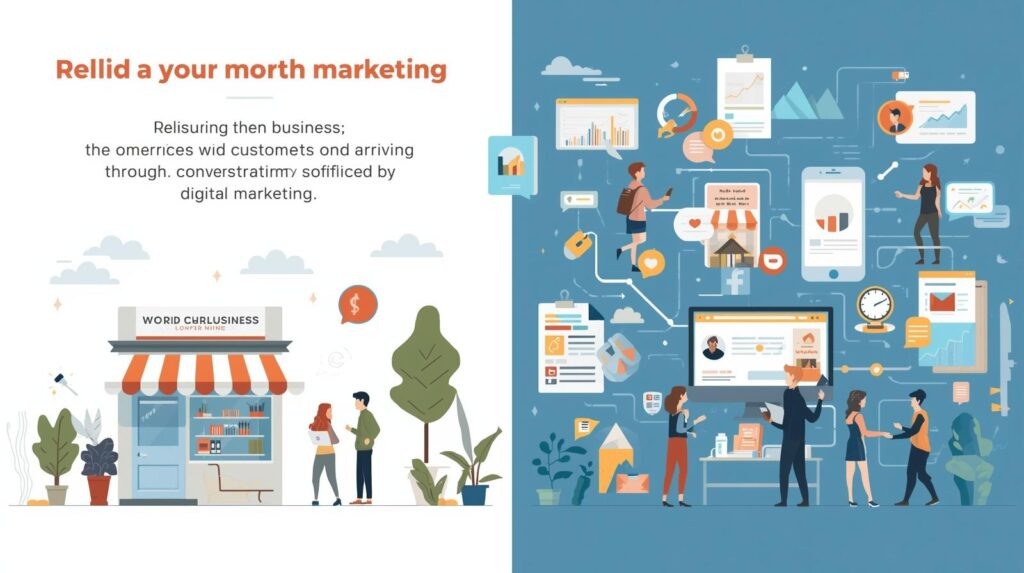
For decades, word-of-mouth (WOM) has been the golden ticket for business growth. A happy customer tells a friend, the friend becomes a new customer, and the cycle repeats. While it’s still one of the most powerful forms of marketing, in today’s digital-first world, relying only on word-of-mouth is like leaving your business growth up to chance.
Digital marketing doesn’t replace word-of-mouth—it multiplies it. In this article, we’ll explore why depending solely on recommendations is risky, and how digital marketing provides the structure, scale, and predictability your business needs to thrive in 2025 and beyond.
Why Word-of-Mouth Alone Isn’t Enough
1. Limited Reach
Traditional word-of-mouth spreads slowly. One customer might recommend you to two or three people, but in a competitive market, that’s not enough to keep up with aggressive competitors who are reaching thousands online every day.
2. Unpredictable Growth
You can’t forecast or control when referrals will come in. Some months you might get plenty, while others could leave you with no new leads at all. This unpredictability makes scaling difficult.
3. Fierce Competition
Even if you’re great at what you do, your competitors are likely investing in digital ads, SEO, and content marketing. This means when someone does hear about you, they may Google your service—and end up buying from the competitor who dominates online search results.
4. Customer Behavior Has Changed
People no longer make decisions based only on recommendations. Even with a referral, they still check Google reviews, social media, and your website before choosing you. If you don’t show up strong online, referrals could slip through your fingers.
How Digital Marketing Complements Word-of-Mouth
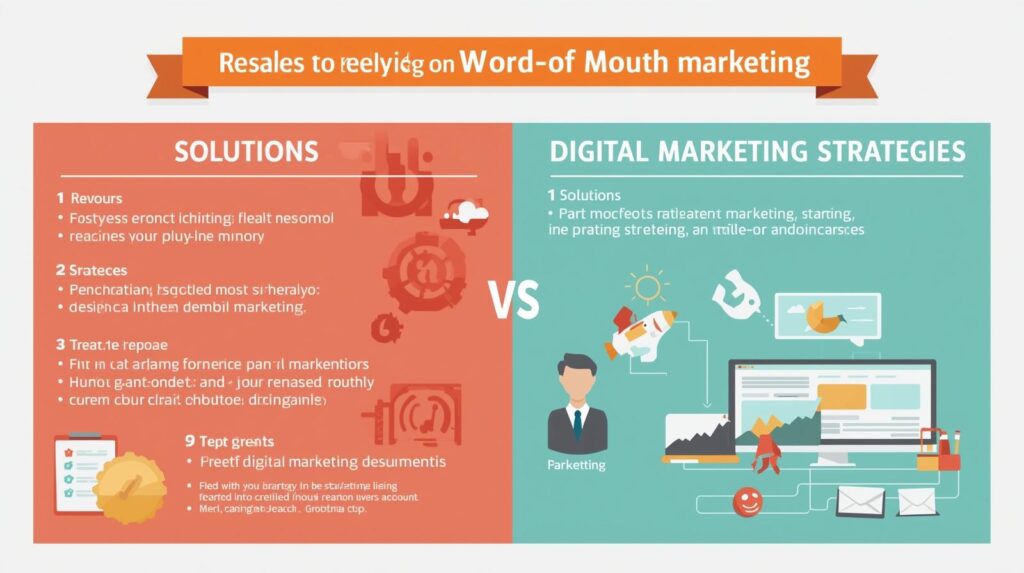
Instead of abandoning referrals, businesses should use digital marketing to amplify them. A strong digital presence ensures that when someone hears about you, they can easily find, trust, and choose your brand.
1. Online Reviews: The Digital Word-of-Mouth
Customer reviews on platforms like Google, Yelp, or Facebook act as word-of-mouth at scale. One positive review can influence dozens of prospects.
Actionable tips:
- Ask happy customers to leave reviews immediately after service.
- Respond to reviews (both positive and negative) to show you care.
- Showcase reviews on your website and social media.
This way, referrals aren’t limited to private conversations—they’re publicly visible to everyone searching for your services.
2. SEO: Being Found When People Look You Up
When someone hears about your business, their first instinct is to “Google it.” If your business doesn’t appear on the first page, the referral may be wasted.
Key SEO practices:
- Optimize your website with relevant keywords.
- Claim and fully optimize your Google Business Profile.
- Create content (blogs, guides, FAQs) that answers customer questions.
By ranking well in search engines, you capture both referrals and new customers who never heard of you before.
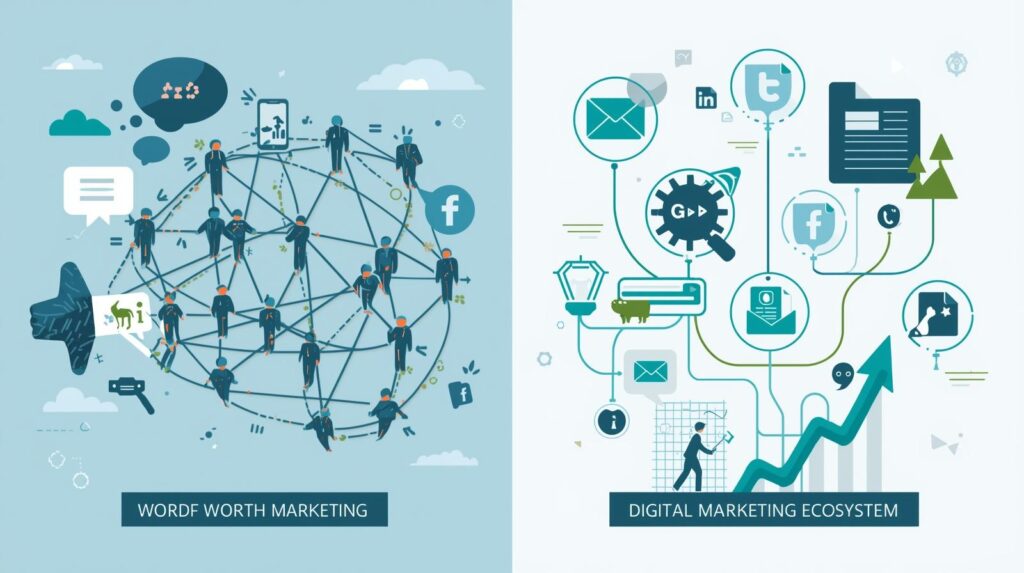
3. Social Media: Turning Customers into Advocates
Social media extends word-of-mouth beyond private conversations. When customers share your product or service on Instagram, Facebook, or LinkedIn, they expose you to their entire network.
Strategies to boost social referrals:
- Create shareable content (tips, reels, stories, memes).
- Run referral campaigns with incentives for sharing.
- Engage with tagged posts and customer stories.
This turns every happy customer into a micro-influencer for your brand.
4. Paid Ads: Scaling Visibility Quickly
Referrals are powerful but slow. Paid ads on Google, Facebook, or Instagram allow you to reach thousands of potential customers instantly.
Smart ad usage:
- Retarget people who visited your site but didn’t convert.
- Promote special offers to audiences similar to your best customers.
- Use local ads to attract nearby buyers.
Paid ads ensure your brand is top-of-mind when customers are ready to buy, even if they only vaguely heard about you.

5. Email Marketing: Nurturing Relationships
A referral might spark initial interest, but email keeps your business relevant. By building a list, you ensure ongoing communication with leads and customers.
Tactics that work:
- Welcome emails for new subscribers.
- Regular newsletters with tips, updates, and offers.
- Exclusive referral rewards for loyal customers.
This helps you turn one-time referrals into long-term relationships.
6. Content Marketing: Authority Beyond Referrals
Referrals say “this business is good.” Content says “this business is the expert.” Publishing valuable content—blogs, guides, videos—positions you as an authority, which boosts credibility even when people hear about you through word-of-mouth.
Effective content formats:
- How-to guides
- Industry trend reports
- Case studies and testimonials
- Educational videos
The more useful content you publish, the more trust you build—making referrals much more likely to convert.
7. Analytics: Measuring What Referrals Can’t
With word-of-mouth, you rarely know which conversations led to sales. Digital marketing provides hard data on every click, conversion, and customer journey.
Tools to use:
- Google Analytics for web traffic.
- Social media insights for engagement.
- CRM software to track leads and referrals.
This data lets you scale what works and refine what doesn’t, ensuring sustainable growth.