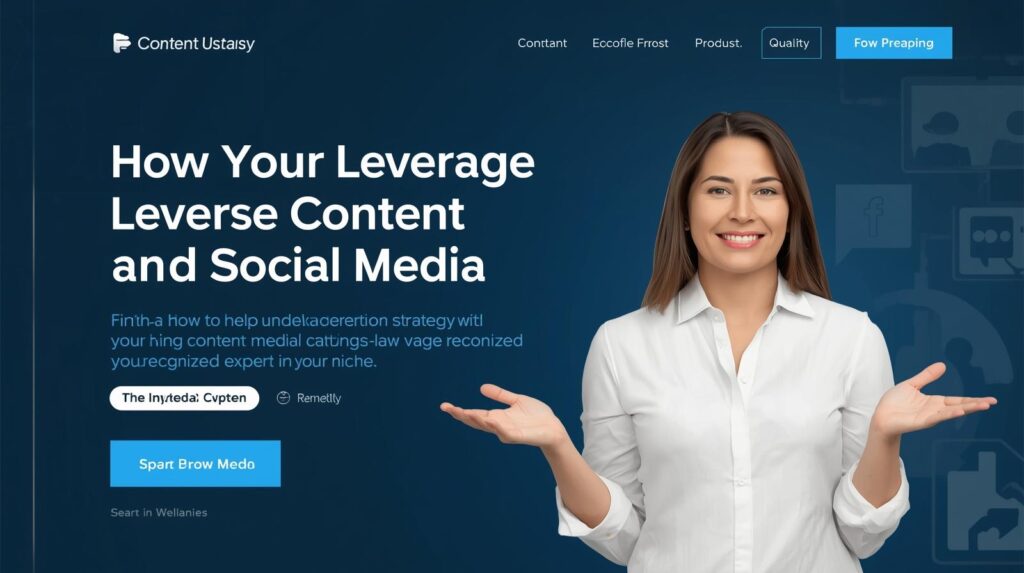
In today’s competitive consulting landscape, clients no longer hire the first consultant they come across. Instead, they look for someone who demonstrates expertise, authority, and trustworthiness (E-A-T) before making a decision. That’s where content and social media marketing come in.
By consistently sharing valuable insights, case studies, and thought leadership across the right platforms, consultants can position themselves as the go-to expert in their niche. This guide will walk you through proven strategies to leverage content and social media for authority building.
Why Content and Social Media Matter for Consultants
Before diving into strategies, let’s understand why content and social media are powerful for consultants:
- Showcase expertise – Sharing knowledge builds credibility and positions you as a thought leader.
- Stay top of mind – Regular posts keep you visible to potential clients.
- Build trust – Free value upfront makes people more likely to invest in your paid services.
- Generate leads – Engaging content attracts clients who are already interested in your niche.
- Differentiate yourself – Standing out is easier when you share unique perspectives.
In short, great content plus smart social media distribution equals consistent client opportunities.

Step 1: Define Your Niche and Target Audience
You can’t be the go-to expert for everyone. Authority comes from being specific and focused.
- Choose your niche: Instead of “business consulting,” narrow down to “digital transformation consulting for mid-sized tech companies” or “leadership coaching for healthcare executives.”
- Know your audience’s pain points: What keeps your ideal client up at night? What questions do they ask?
- Align content with solutions: Every blog, post, or video should connect their pain points to your expertise.
Pro tip: The more niche you are, the easier it is to dominate that space online.
Step 2: Build a Strong Content Strategy
Content is the foundation of your expert status. Without it, social media has nothing valuable to amplify.
Types of Content Consultants Should Create
- Educational Blog Posts – How-to guides, industry insights, and case studies.
- LinkedIn Articles – Thought leadership tailored for professionals.
- Videos/Webinars – Great for building trust and showcasing personality.
- Podcasts/Interviews – Share expertise while reaching new audiences.
- Case Studies & Whitepapers – Proof of results builds authority fast.

Content Pillars Approach
Choose 3–5 core topics (pillars) and create content consistently around them. Example for a marketing consultant:
- SEO strategies for small businesses
- Lead generation funnels
- Personal branding for entrepreneurs
- Case studies of client success
This way, your audience quickly associates you with expertise in those areas.
Step 3: Master Social Media for Consultants
Once you have content, it’s time to amplify it through the right channels. Not all platforms are equal for consultants.
Best Platforms for Consultants
- LinkedIn – The #1 platform for professional consultants. Share articles, engage in groups, and use thought-leadership posts.
- Twitter/X – Great for quick insights and building conversations with industry leaders.
- YouTube – Perfect for educational and long-form video content.
- Instagram/Facebook – More relevant for B2C consultants (coaches, wellness experts, etc.).
How to Use Social Media Effectively
- Post consistently – 3–5 times a week on LinkedIn builds visibility.
- Engage actively – Comment thoughtfully on posts from industry leaders and prospects.
- Use storytelling – Share personal lessons, client wins, and behind-the-scenes moments.
- Repurpose content – Turn blogs into LinkedIn carousels, podcasts into video clips, and webinars into social snippets.
- Leverage hashtags & SEO – Helps people discover your expertise.

Step 4: Establish Thought Leadership
To become the “go-to” expert, you need to go beyond posting tips. You must demonstrate original thinking.
- Share frameworks and models – Create your own method (e.g., “The 3C Growth Framework”).
- Publish research and insights – Share data, surveys, or trends in your industry.
- Speak on podcasts and webinars – Exposure to new audiences builds authority.
- Write a book or eBook – The ultimate trust signal for many consultants.
Thought leaders don’t just share information—they shape conversations in their industry.
Step 5: Build Social Proof
Even with strong content, clients want to see results. Social proof builds trust faster than anything else.
Ways to add social proof:
- Client testimonials – Share written or video reviews.
- Case studies – Show before-and-after scenarios.
- Logos of clients – If possible, showcase reputable companies you’ve worked with.
- Speaking engagements – Highlight panels, webinars, or conferences where you’ve presented.
Step 6: Create a Lead Generation System
Authority without clients isn’t sustainable. Your content and social media should lead prospects into your sales funnel.
- Lead magnets – Offer free guides, checklists, or toolkits in exchange for emails.
- Email nurture sequences – Share valuable tips and soft pitches over time.
- Call-to-actions (CTAs) – Every piece of content should invite the next step (book a call, download a guide, etc.).
- LinkedIn DMs – Build relationships first, then offer value before pitching services.
Step 7: Track and Improve
Becoming the go-to expert is a marathon, not a sprint. Use analytics to refine your approach:
- Which posts get the most engagement?
- What type of content brings inquiries?
- Which platforms bring the best leads?
Adjust based on performance and double down on what works.
Common Mistakes Consultants Should Avoid
- Being too broad – Dilutes your authority.
- Only promoting services – People want value, not constant sales pitches.
- Inconsistent posting – Hurts credibility and visibility.
- Not engaging with others – Social media is two-way, not one-way broadcasting.