Introduction: Why Referrals Alone Won’t Take You Far
Referrals are a powerful way for coaches to land their first few clients. They’re built on trust and word-of-mouth credibility. But here’s the challenge: referrals are unpredictable and limited. If you want to consistently fill your coaching calendar, increase revenue, and scale your business, you need a digital marketing strategy that works even when you’re not networking or waiting for introductions.
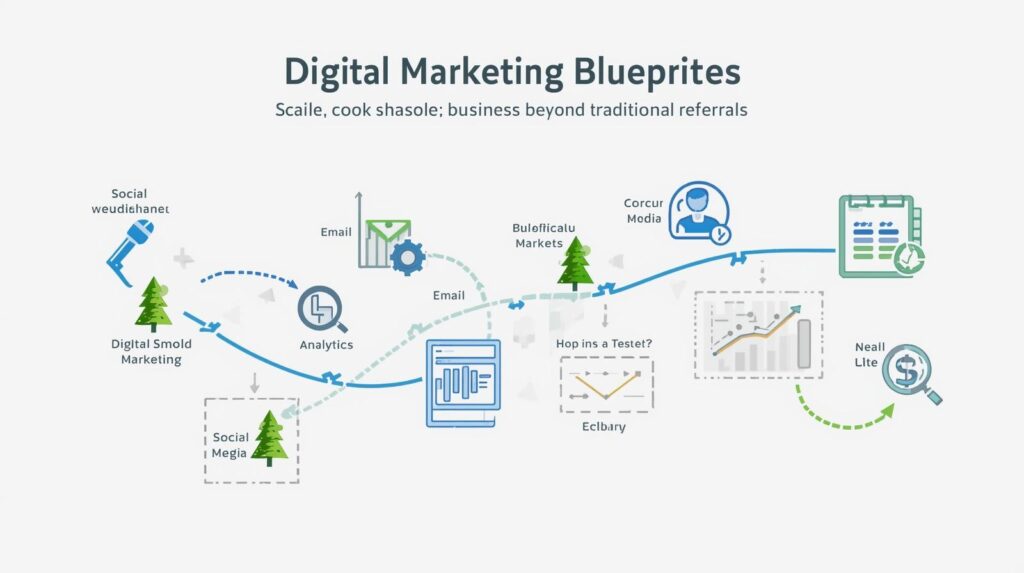
That’s where a digital marketing blueprint comes in. It’s a system designed to attract, nurture, and convert leads — helping you move beyond referrals into predictable, sustainable growth.
In this guide, you’ll learn the essential steps every coach needs to build that system.
Step 1: Define Your Coaching Niche and Ideal Client
The first step in any digital marketing strategy is clarity. If your message tries to speak to everyone, it will resonate with no one.
- Niche down: Are you a life coach, business coach, career coach, or wellness coach? Go deeper — for example, “career coach for mid-level professionals who want to transition into tech.”
- Define your ideal client persona:
- Age, gender, profession, location
- Challenges they face
- Goals they want to achieve
- Craft your unique value proposition (UVP): Why should someone choose you over another coach?
Example: Instead of saying, “I help people achieve success,” say, “I help mid-career professionals transition into leadership roles in 90 days without burnout.”
Clarity makes your digital marketing magnetic.
Step 2: Build a High-Converting Website
Your website is your digital headquarters. Referrals might send people directly to your inbox, but new clients will almost always check your website before booking a call.
Key elements your coaching website must have:
- Clear homepage headline: State who you help and how.
- About page: Build trust with your story and credentials.
- Services/Programs page: Clearly list coaching packages, outcomes, and benefits.
- Lead magnet (free resource): Offer a guide, checklist, or webinar in exchange for an email.
- Testimonials/Case studies: Social proof builds trust faster than anything else.
- Call-to-action (CTA): A “Book a Discovery Call” button should appear across your site.
Pro Tip: Use tools like WordPress + Elementor, Squarespace, or Kajabi to create a professional yet easy-to-manage site.
Step 3: Create Content That Attracts Your Audience
Content marketing positions you as the go-to expert in your niche. It helps you attract people who are already searching for solutions to their problems.
Types of content to focus on:
- Blog posts & SEO articles – Answer questions your clients are asking.
- YouTube videos – Build authority and personal connection.
- Podcasts/Guest appearances – Reach new audiences.
- Social media posts – Share tips, behind-the-scenes, and client wins.
Example: If you’re a career coach, a blog like “10 Questions to Ask Before Switching Industries” will attract people ready for change.
Consistency is key. One well-written article per week is enough to build momentum.
Step 4: Build Your Email Marketing Funnel
Referrals work because someone else is nurturing trust on your behalf. To scale, you need to build your own trust machine — and email marketing is the best way.
Your funnel should look like this:
- Lead Magnet: Free guide, checklist, or training.
- Email Nurture Sequence: A series of 5–7 emails delivering value, building trust, and showing how you can help.
- Offer: Invite them to book a discovery call or join a program.
Example Funnel:
- Day 1: “Welcome + Here’s your free guide.”
- Day 3: Share a client success story.
- Day 5: Give 3 actionable tips.
- Day 7: Invite them to a free discovery call.
Email automation tools: ConvertKit, ActiveCampaign, or Mailchimp.
Step 5: Leverage Social Media the Right Way
Social media isn’t about posting random motivational quotes. It’s about strategic visibility.
Focus on:
- Choosing 1–2 platforms (LinkedIn, Instagram, or YouTube work best for coaches).
- Posting value-driven content (tips, frameworks, client stories).
- Engaging with your audience (comment, DM, join conversations).
- Going live/webinars to showcase expertise.
Pro Tip: Repurpose content. A blog post can become 5 LinkedIn posts, 3 Instagram reels, and 1 email.
Step 6: Run Paid Ads for Predictable Growth
Once your organic foundation is in place, paid ads help you scale faster.
Best ad strategies for coaches:
- Facebook/Instagram Ads: Drive traffic to your lead magnet or webinar.
- LinkedIn Ads: Target professionals for business or career coaching.
- Retargeting Ads: Show ads to people who visited your site but didn’t book.
Important: Don’t run ads until you have a proven offer and a working funnel. Otherwise, you’ll waste money.

Step 7: Collect and Showcase Social Proof
Just like referrals, social proof is what builds instant trust. But online, you have to actively display it.
Ways to showcase proof:
- Written testimonials
- Video testimonials
- Case studies highlighting client transformation
- Screenshots of messages (with permission)
Pro Tip: Ask for testimonials right after a client experiences a big win. That’s when they’re most excited to share.
Step 8: Track, Measure, and Optimize
The beauty of digital marketing is that it’s measurable. Unlike referrals, you can see exactly what’s working and what’s not.
Metrics to track:
- Website traffic (Google Analytics)
- Email open/click rates
- Social media engagement
- Ad conversion rates
- Discovery calls booked
Pro Tip: Use these insights to double down on what works and drop what doesn’t.