
Introduction
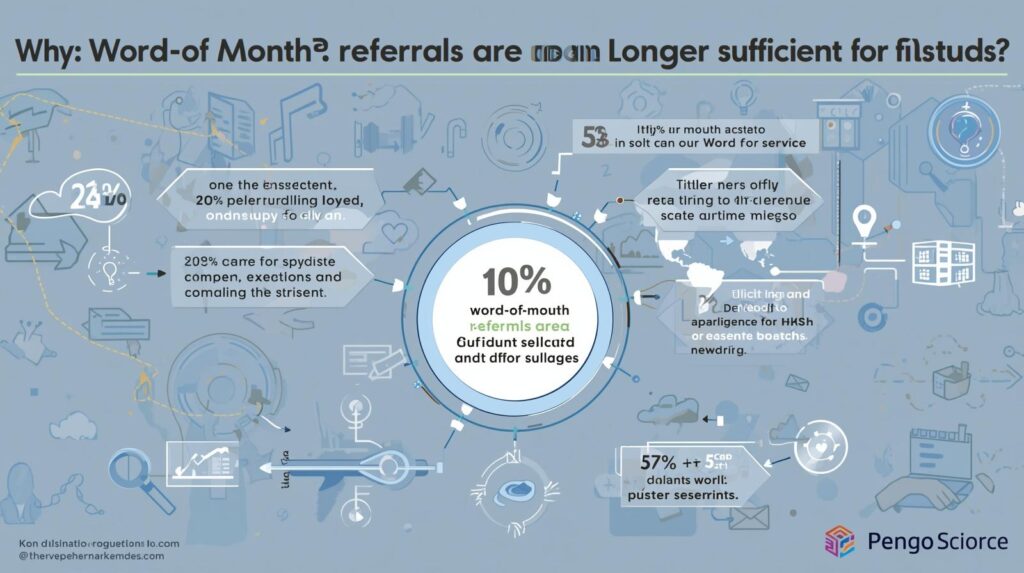
For decades, word-of-mouth referrals were the lifeblood of consultants. A satisfied client would recommend you to their peers, and before long, your calendar was full. While referrals are still valuable, the consulting landscape in 2025 looks very different. Competition is fiercer, digital-first clients are more cautious, and buying decisions are shaped by what people see online as much as what they hear from a trusted colleague.
The truth is, word-of-mouth alone is no longer enough to sustain or scale a consulting business. If you’re relying solely on referrals, you’re likely leaving opportunities (and revenue) on the table. This article explains why that’s the case, and what strategies modern consultants should adopt to thrive in today’s market.
Why Word-of-Mouth Alone Isn’t Enough Anymore
1. The Consulting Market is Overcrowded
The number of independent consultants and boutique firms has exploded in recent years. From business strategy to digital transformation to personal coaching, potential clients now have dozens of options. Referrals may get you in the door, but they don’t guarantee conversion when the competition is just one Google search away.
2. Clients Do Their Homework Online
Even when referred, most clients will Google your name or company before reaching out. They’ll check your website, LinkedIn profile, testimonials, and even your content. If your digital presence is weak—or worse, nonexistent—referrals may fizzle out before you ever get the chance to pitch.
3. Referrals Are Inconsistent
Word-of-mouth leads are unpredictable. You may get five referrals one month and none for the next three. This lack of consistency makes it difficult to plan revenue, scale operations, or build a long-term pipeline.

4. Younger Decision-Makers Trust Digital Proof More
The new generation of executives and entrepreneurs grew up with the internet. They are more likely to trust case studies, online reviews, and thought leadership than an offline recommendation alone.
5. Algorithms Shape Visibility
In 2025, visibility isn’t just about who knows you—it’s about whether you show up where your audience is looking: LinkedIn feeds, Google search, podcasts, or YouTube. Word-of-mouth doesn’t get you there.
What Consultants Should Do Instead
If word-of-mouth is no longer enough, what should consultants do to stay competitive? The key is building a strong, intentional digital presence that complements referrals and creates its own demand. Here’s how:
1. Build a Professional Website That Converts
Your website is your digital headquarters. It should clearly communicate:
- Who you help
- What problems you solve
- Why you’re different
Essential elements:
- A professional “About” page that builds trust
- Case studies or success stories
- A clear call-to-action (book a call, schedule a consultation, download a resource)
- Testimonials and social proof
Even if someone finds you through a referral, your website often makes or breaks their decision.
2. Leverage Content Marketing
Position yourself as an authority by sharing your expertise online. Content builds credibility and nurtures leads that may not be ready to buy immediately.
Examples:
- Blog posts: Answer the top questions your clients ask.
- LinkedIn articles: Share insights and case studies.
- Videos/podcasts: Break down complex concepts in a simple, engaging way.
When potential clients search online, your content ensures you’re part of the conversation.

3. Use LinkedIn Strategically
LinkedIn is the go-to platform for consultants in 2025. A strong LinkedIn presence can help you:
- Showcase thought leadership
- Build connections with decision-makers
- Generate inbound leads through organic reach
Practical steps:
- Optimize your profile (headline, banner, about section)
- Post regularly (industry insights, lessons learned, client wins)
- Engage with your network’s posts to stay visible
4. Collect and Showcase Social Proof
Referrals may come by word-of-mouth, but online testimonials and reviews multiply their impact. Clients want to see evidence, not just hear about it.
Where to showcase:
- LinkedIn recommendations
- Google Business Profile reviews
- Video testimonials on your website
The more visible your credibility, the easier it becomes to close new deals.
5. Build an Email List
Social platforms are powerful, but you don’t own them. Algorithms change, reach fluctuates, and you can’t control who sees your posts. An email list, however, gives you direct access to your audience.
Offer something of value (e.g., a free guide, checklist, or template) in exchange for email sign-ups. Then, nurture subscribers with regular insights, case studies, and offers.
6. Experiment with Paid Advertising (Smartly)
For consultants ready to scale, targeted ads on LinkedIn or Google can put you in front of the right decision-makers faster. Unlike referrals, ads allow you to control volume and target specific industries, roles, or pain points.
7. Network Online and Offline
While word-of-mouth is declining in power, networking is not. The difference is that much of it has shifted online:
- Join niche LinkedIn groups
- Speak at virtual events or webinars
- Collaborate with other consultants on podcasts or co-authored content
This hybrid approach ensures you’re visible both in person and digitally.
Case Example: Word-of-Mouth vs Digital Presence
Imagine two consultants, both equally skilled:
- Consultant A relies only on referrals. They get some projects but experience dry spells and struggle to build predictability.
- Consultant B gets referrals but also has a strong LinkedIn presence, publishes articles, and showcases testimonials on a professional website. Even when referrals slow down, inbound leads keep coming through content and visibility.
Who do you think grows faster and sustains momentum?
The New Formula for Consultant Growth
The winning approach isn’t to abandon word-of-mouth—it’s to combine it with a strong digital strategy. Referrals provide trust, but digital proof provides scalability. Together, they create a reliable, diversified client pipeline.